Most overseas clients start with an existing 4-, 6-, or 8-slot platform, then customize the pieces that move conversion: color, logo, firmware rules, payment hooks, and packaging. Full clean-sheet ODM is possible, but it is slower and better suited once you have field data.
OEM vs ODM in one paragraph
OEM means you begin with our proven mechanical and electronic platform and tailor branding, capacity options, cables, and software hooks. ODM means we design a differentiated product to your spec. In 2026 most programs we ship are hybrid: OEM base + targeted ODM on ID or PCB areas that matter commercially.
Stages we actually gate in production
- Requirements lock — countries, slot count, connector policy, payment partners, target ship month.
- ID / structure sign-off — color, logo process, mold limits, safety layout.
- EVT — prove charging behavior, thermal performance, and basic UX.
- DVT — small batch with firmware + cloud + payment integration.
- PVT — freeze BOM, QC plan, aging procedure, packaging spec.
- Mass production + export pack — certificates and transport docs aligned to the invoice.
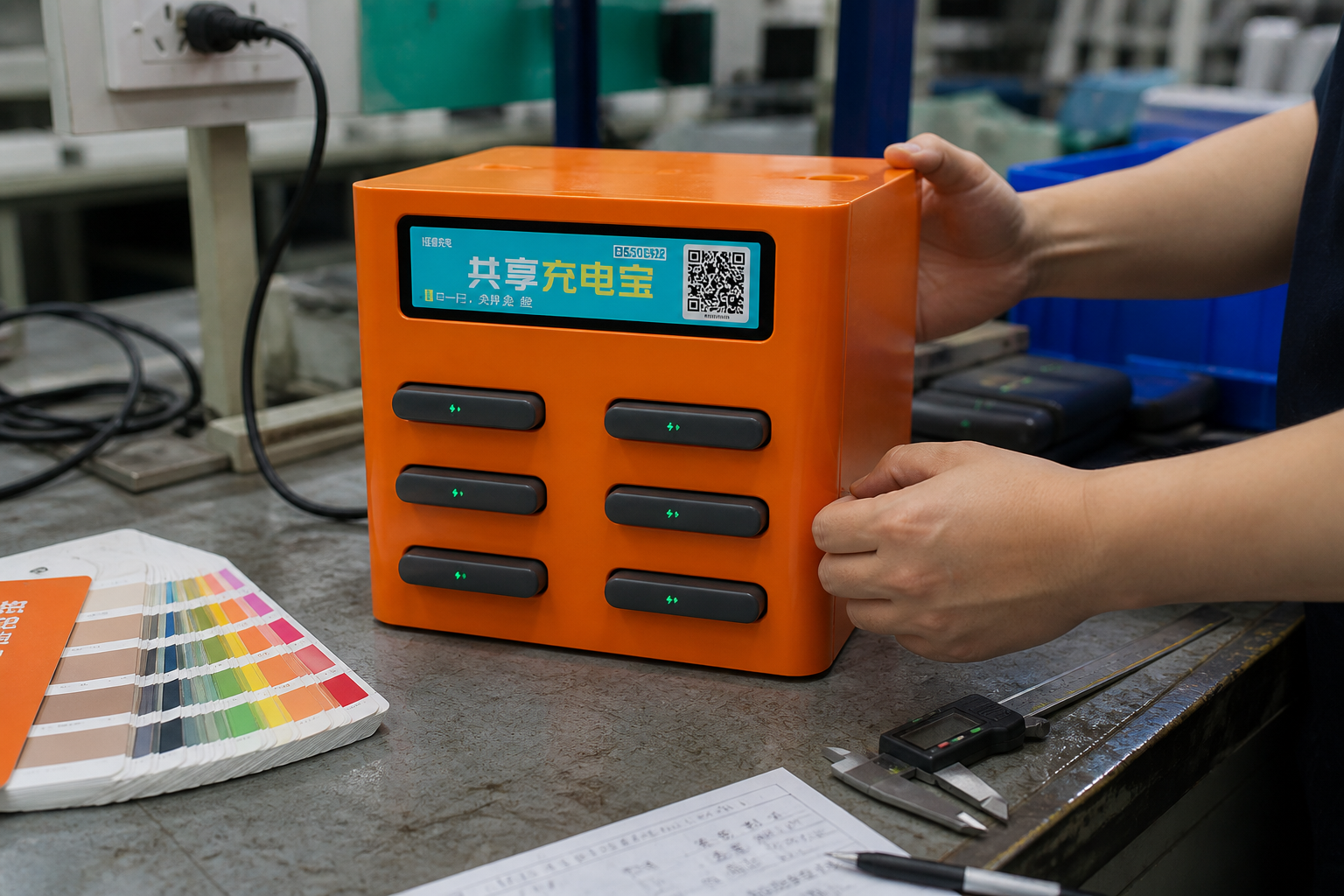
What buyers customize most often
- Logo process: silk screen vs laser on cabinet and power bank shell
- Capacity bands: 5000–8000mAh packs depending on size target
- Dashboard white-labeling and role permissions
- Local wallet modules and settlement fields
Certification planning belongs in week two, not week ten. CE, FCC, RoHS, UN38.3, and MSDS should trace to the exact cells you will ship — not a cousin model from last year.